
When an injury is permanent, early review should connect diagnosis, prognosis, daily function, future care, work loss, and liability proof before an insurer frames the case around past bills alone.
What to decide first
Confirm whether the harm, defendant, damages, and proof point toward a case that needs attorney review.
Case focus
Catastrophic Injury Litigation
Brain injury, spinal cord injury, amputation, severe burns, and permanent impairment cases require early proof of future care, work loss, and long-term medical needs.
Proof track
brain injury, spinal cord injury, amputation, severe burns, paralysis, major surgery, or lasting disability.
Future-care proof: provider recommendations, therapy needs, assistive devices, home changes, medication, and lost earning capacity.
Attorney review
Request Case Review
Use the case review form or call (405) 759-0515 for direct attorney intake.
When catastrophic injury needs attorney review
A high-value case is not just a big number. It often involves life-changing harm, disputed responsibility, meaningful damages, and records that need careful review. This practice area is strongest when the harm, disputed responsibility, damages, and available records support direct attorney review.
Send the key facts for attorney review.
If this involves death, catastrophic injury, a commercial defendant, or evidence that may need preservation, jump to the case-review form or call the firm.
01
What makes an injury catastrophic?
A catastrophic injury is not defined only by the emergency-room bill. It is an injury that can change work, independence, family roles, mobility, cognition, pain, and future medical needs.
Attorney review may be important when the case involves:
- Traumatic brain injury or cognitive change
- Spinal cord injury, paralysis, or mobility loss
- Amputation, limb salvage, or prosthetic needs
- Severe burns, grafting, infection risk, or scarring
- Permanent impairment after a truck, car, motorcycle, work-site, or premises event
- Future surgery, therapy, medication, home modification, or attendant-care issues
02
Future-care proof matters before settlement value is discussed
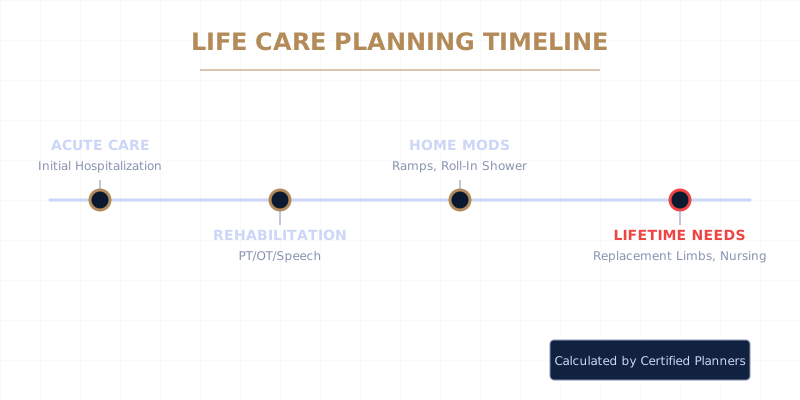
Past bills rarely tell the whole story. A serious injury review should ask what care is reasonably expected, what work capacity changed, what help is needed at home, and what medical proof supports those conclusions.
When the facts require it, catastrophic injury cases may involve treating physicians, life-care planners, vocational experts, economists, rehabilitation specialists, or other case-specific experts. The goal is to tie future needs to reliable proof, not speculation.
- Home Modifications: Wheelchair ramps, widened doorways, roll-in showers.
- Replacement Schedules: Prosthetics and other assistive devices may require replacement over time.
- In-Home Support: Skilled nursing, attendant care, or family-care burdens may need careful review.
- Projected Treatment: Future procedures, therapies, and specialist care should be tied to provider recommendations.
- Work and Income Loss: Earning-capacity review should account for restrictions, retraining limits, and realistic job access.
03
Catastrophic injury case types we review
Traumatic Brain Injury (TBI)
From concussions to severe diffuse axonal injuries, the review should connect symptoms, records, functional changes, and specialist opinions.
Learn about TBI Litigation ->Amputation
The loss of a limb can affect mobility, work, home access, pain, and replacement-device planning.
See Prosthetic Costs ->Spinal Cord Injury
Spinal cord cases may involve transportation, home modification, bowel and bladder care, therapy, and long-term support needs.
Spinal Cord Injury Guide ->Severe Burns
Severe burn cases may involve grafting, infection risk, scarring, mobility limits, and long-term pain care.
Industrial Burn Cases ->04
Where catastrophic injury cases often begin
The legal plan depends on what caused the injury and who controlled the evidence. Catastrophic harm can arise from:
- Commercial truck wrecks involving carrier, driver, vehicle, maintenance, and electronic-data records.
- Serious car crashes involving disputed fault, severe medical causation, or multiple insurance layers.
- Motorcycle wrecks where visibility, roadway evidence, and rider-bias defenses may matter.
- Oilfield and work-site incidents involving contractor control, safety planning, equipment, or job-site records.
- Civil-rights incidents involving custody injury, police force, or government-contractor conduct.
05
Proving injuries the defense may minimize
Some losses do not show up neatly on a single scan or bill. Brain injury symptoms, chronic pain, medication side effects, fatigue, sleep disruption, mobility limits, and family-care burdens should be connected to records, provider observations, functional evidence, and witness proof.
06
Daily-life evidence can explain the real loss
Daily-life documentation can help explain how a permanent injury affects mobility, memory, care routines, family responsibilities, and independence. The goal is to connect medical proof to concrete day-to-day losses in a format a mediator, insurer, or jury can understand.
07
What should be reviewed before a release is signed
Before a release is evaluated, the review should address diagnosis, prognosis, future treatment, assistive-device needs, home modifications, medication, therapy, transportation, lost earning capacity, insurance coverage, liens, and the evidence needed to prove fault.
For cases involving death or permanent impairment after a major wreck, compare the broader high-value negligence review, catastrophic injury results, and high-value negligence results.
Evidence and Next Steps
Use these resources to move from general information to the records, proof, and case-review steps that fit the matter.
Request Case Review
Request a review if records, deadlines, or insurance contact may affect this catastrophic injury matter.
Review Request Case ReviewCase Results
Compare documented outcomes that show how similar proof translated into value.
Review Case ResultsHicks Legal Journal
Use supporting analysis and client-facing reference material to understand the next evidence and timing issues.
Review Hicks Legal JournalClient Guides
Use supporting analysis and client-facing reference material to understand the next evidence and timing issues.
Review Client GuidesResource Library
Use supporting analysis and client-facing reference material to understand the next evidence and timing issues.
Review Resource LibraryAttorney Profile
Review trial counsel background and the firm posture behind this practice area.
Review Attorney ProfileTrust Center
Check the firm standards, review process, and proof posture before deciding.
Review Trust CenterPersonal Injury Overview
Open the next resource that best matches this catastrophic injury case.
Review Personal Injury Overview